What are the functions of the elevator inspection switch?

The inspection switch is used to switch between the normal operation of the elevator and the inspection state. When it goes to “check and repair” the elevator does not respond to incoming and outgoing calls and cannot travel at high speed. What are the functions of the elevator inspection switch? What should be noted when the elevator is overhauled? More information is needed on matters needing attention during the operation and use of the elevator.
What are the functions of the elevator inspection switch?

What are the functions of the elevator inspection switch?

  1. Pay attention to the inspection operation

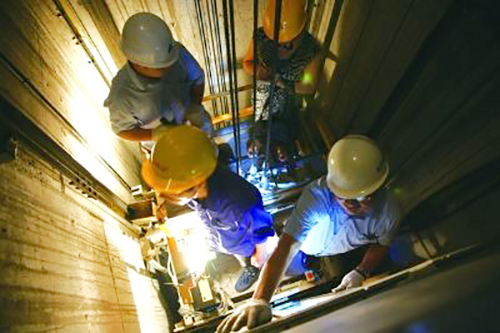
If the elevator needs to run slowly during inspection, the number of people should not be less than two. Also pay attention to safety, especially when operating on the top of the car. When the cage roof is undergoing inspection and operation, it shall close all the doors of the outer hall before running slowly. When the elevator runs at a slow speed to a certain position, if the inspection of electrical and mechanical parts is needed, the inspection personnel should first cut off the emergency switch on the top of the car or the emergency button on the car’s control panel before the operation.

  1. Pay attention to the inspection operation in unsafe condition

If the elevator is out of control but the safety clamp is not working, the personnel inside the elevator should remain calm. In case of failure, the personnel in the elevator shall use all communication facilities to inform the related personnel. If an earthquake occurs, the elevator should immediately stop operating on the nearest floor. In case of fire, the elevator should be moved to the safe floor as soon as possible, and then the personnel inside the elevator should be evacuated safely. After all the personnel are evacuated, the power of the elevator should be cut off, and the doors of each floor should be closed. If the elevator is out of control, the emergency stop button should be pressed immediately, and the personnel inside the elevator cannot open the car door to jump out in case of danger.
How to solve common issues of escalator handrails?

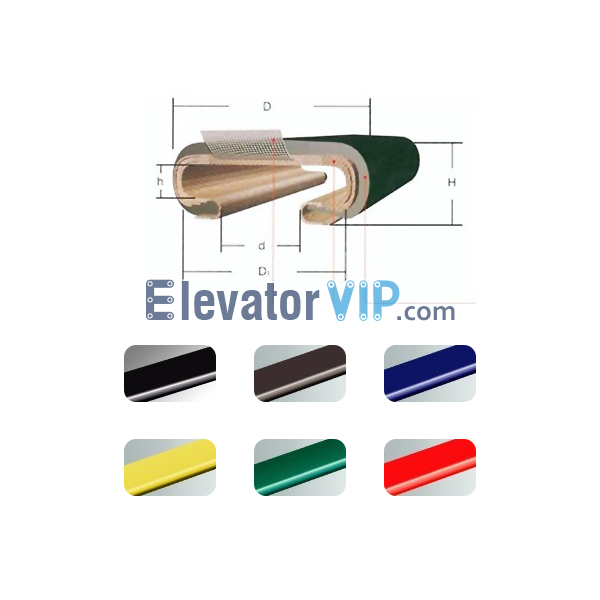
Escalator is a fixed electrical drive with a circular movement step used to tilt passengers upward or downward. Here are a few common issues with escalator handrails.

OTIS Escalator Handrails Supplier & Manufacturer, Handrails for Moving Walkways & Moving Sidewalks XWG265A23

Escalator Handrails Supplier & Manufacturer, Handrails for Moving Walkways & Moving Sidewalks XWG265A23


  • 1st, there is steel wire going through the surface or sliding layer of the handrail, which is the most dangerous case in the field failure of the handrail, because it means that the steel wire inside the handrail has probably broken.
  • 2nd, escalator handrail can be pulled out easily from guide rail; it is the phenomenon that the lip of escalator handrail greatens. There have been two reported incidents in which passengers had their fingers stuck between the lip and the guide, so they were cut off.
  • 3rd, when the handrail is lagging during escalator works. The running speed of the handrail cannot keep up with the running speed of the stairs. This can cause the upper and lower parts of the passenger’s body to run at different speeds while holding the handrail, especially for the elderly and weak passengers who are prone to falls.
  • 4th, the cracking of the extrusion line in the handrail will not lead to passenger risk in general, but the cracked part may still clip the fingers, so there is a certain risk.
  • 5th, the lip of the handrail is cracked. Because passengers hold the handrail when riding the escalator, even if the lip of the handrail is cracked, it is generally closed during this journey. And the lip mouth of handrail is cracked won’t expand the position above the extrusion line of handrail commonly, because this won’t cause the safety problem of passenger commonly.
  • 6th, the small crack on the surface of the handrail is generally caused by the aging and cracking of the handrail. The crack will not affect passengers’ safety. But if left unattended for a long time, the small cracks will expand and may cause even greater cracking, causing operational issues in the banisters.
  • 7th, The surface of the handrail is bulging just because the inner material of the handrail is delaminated, bulge generally do not cause operational and safety issues with the handrail, but it is inappropriate to ignore them.
  • 8th, the escalator handrail surface appears small bubble, because be polluted by oil commonly, There will be no impact on the operation and safety of the handrail.


When do replacement for handrail of escalator, please do not forget to stop the escalator, turn off the power, put up a safety warning sign and remove the tensioning connecting screw to keep body safe.


Why the elevator floor display panel is not displayed? –How should it be fixed?

Floor display of elevator equipment:

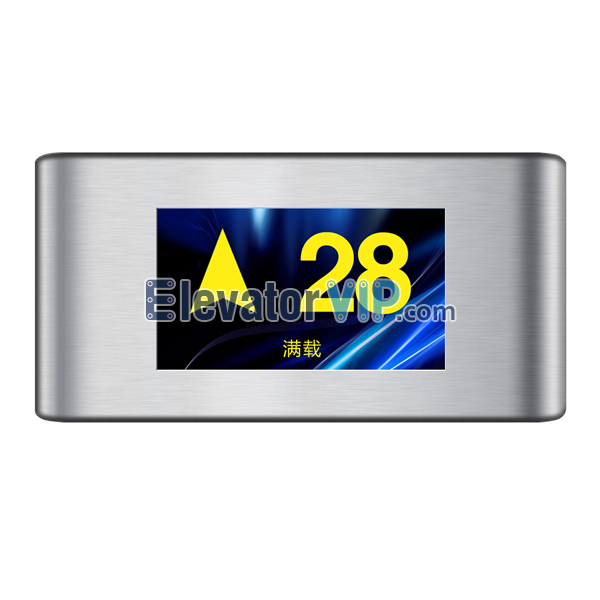
The advanced photoelectric sensing technology is used to sample the running state of the elevator, and the running state of the elevator is superimposed with the information of “elevator name”, “elevator running state” and “floor signal” in the form of Chinese, English letters and Numbers to dynamically record the running state of the elevator.

Because video IC and Chinese character chip are adopted with high performance and advanced production technology of patch, it has the advantages of small size, light weight, high stability of acquisition signal and the superposition naming of each elevator in Chinese or digital.

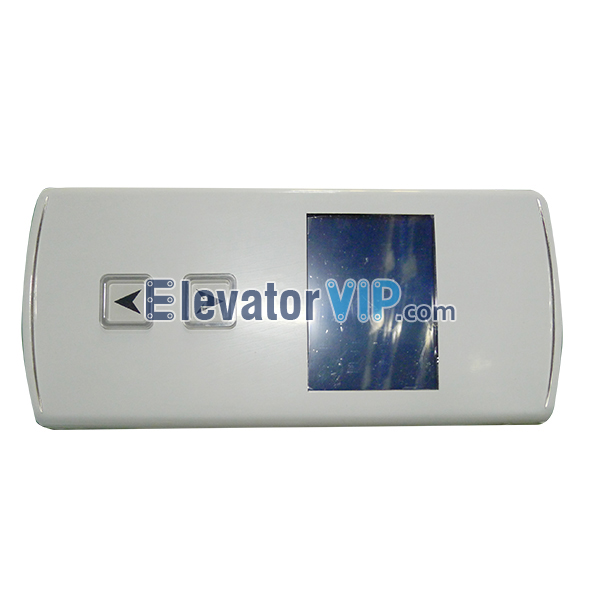
Elevator Duplex & Integrated 4.3

Elevator Duplex & Integrated 4.3″ STN LCD Display, Elevator LCD Display with BS34C Button, Elevator LCD Display with Hairline Panel, Elevator LCD Display and Push Button in One Calling Board, OTIS Lift LCD Display, Elevator LCD Display, Elevator LCD Display Supplier, Elevator LCD Display Manufacturer, Elevator LCD Display Exporter, Wholesale Elevator LCD Display, Elevator LCD Display Factory, Cheap Elevator LCD Display for Sale, Buy Quality Elevator LCD Display from China, XAA23503F9AS

Main functions of elevator display:Continue reading

What kinds of drive method does an elevator have?

Three driving methods of elevator:

Traction driven elevator – the lift rope is driven by friction driven by the drive wheel rope groove of the main engine.

Parliamentary forced drive elevator — non-friction elevator driven by chain or wire rope suspension.

Press hydraulic elevator – hydraulic driven elevator.


Traction drive

Traction drive is driven by a traction wheel. The steel wire rope is suspended on the traction wheel. The car is suspended at one end and the heavy device at the other end.

  1.  Rope winding
    The winding way of the elevator traction wire rope mainly depends on the position of the traction unit, the rated load and the rated speed of the car. When selecting and determining the rope winding mode, high transmission efficiency, reasonable energy consumption and long service life of wire rope should be considered.
  2.  Calculation of traction force
    The maximum effective traction force can be generated in the towing wheel groove is the friction coefficient between the steel wire rope and the wheel groove and the function of the steel wire rope around the Angle of the towing wheel.
  3. Measures to improve traction capacity
    * Change the shape of rope groove and material of rope groove to improve the friction coefficient.
    * Increase the envelope Angle
    * Increase the weight of the car
  4. Calculation of specific pressure of wire rope in towing wheel groove (see textbook)
  5. Friction coefficient of wire rope in rope groove (see textbook)
  6. Causes of wear on the traction sheave rope groove

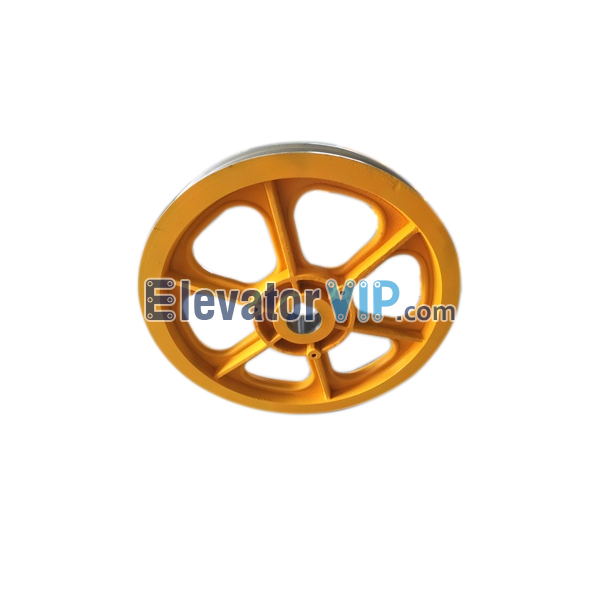
Elevator Traction Sheave, Elevator φ700 3 Rope Grooves Traction Sheave, Elevator 13VTR Traction Sheave, OTIS Lift Driver Traction Wheel, Elevator Traction Wheel Supplier, Elevator Traction Wheel Manufacturer, Elevator Traction Wheel Factory, Elevator Traction Wheel Exporter, Wholesale Elevator Traction Wheel, Cheap Elevator Traction Wheel for Sale, TAA260H2-2011

Elevator Traction Sheave, Elevator φ700 3 Rope Grooves Traction Sheave, Elevator 13VTR Traction Sheave, OTIS Lift Driver Traction Wheel, Elevator Traction Wheel Supplier, Elevator Traction Wheel Manufacturer, Elevator Traction Wheel Factory, Elevator Traction Wheel Exporter, Wholesale Elevator Traction Wheel, Cheap Elevator Traction Wheel for Sale, TAA260H2-2011

The factors that influence the life of the wire rope generally also influence the life of the traction wheel, including the following factors:

  1. The traction wheel itself
  2. Construction, material and physical properties of wire rope
  3. height of car operation
  4. the load
  5. Technical parameters of the tractor and other components
  6. Environment and maintenance ii. Reel drive is an early type of elevator’s driving, except for hydraulic drive is all drum drive. This type of drum is usually driven by two sets of suspended wire ropes, one end of which is fixed to the drum and the other end is connected to the car or the other end. One set of wire ropes is wound clockwise around the drum, while the other is wound counterclockwise around the drum. Therefore, when one set of wire rope wound out of the drum, another set of wire rope wound into the drum.
    The main problems of drum driven elevator are as follows: 1. Low lifting height; 2. Low rated load; 3. Different rollers must be used for different elevator trips; 4. The guide rail bears great lateral force; 5. There is danger of overwinding and backwinding of the wire rope; 6. Large energy consumption
    Other drive modes: 1. Hydraulic drive will be introduced in another course. 2. Currently, screw drive is rarely used in practice. 3. Pinion and rack


Where is the escalator emergency stop switch (key switch box) installed?

What risk factors of injury when escalators are running normally?

  1. The gap between escalator steps and apron boards, although it is very small, but it’s certainly the most dangerous place for escalators to hurt people. In particular, some children like to put their feet on the apron board when taking escalators. If the toe of shoes, shoelaces or pants edge is involved in the gap carelessly, they will bring their feet in.
  2. The end of handrail is easy to hurt hands. The escalator gap between the handrail and the wall in some shopping mall is very small. If you take the escalator and forget to let go or let go too slowly, your hand will be caught along the escalator handrail.
  3. The comb teeth at the entrance and exit. Normally, the carding part of an escalator will have a curve, so that the foot or clothing will not be involved in the operation of the escalator. However, some unqualified equipment, comb teeth will appear defect, gap will have some deviation.
  4. Where the ascending escalator intersects with the top, it will be damaged upon contact. If you lean over while taking the escalator, you can easily get stuck in the intersection of the escalator and the top and get hurt. Some hard signs can be used to help the escalator bite people.
  5. At the Angle between escalator pedal and handrail, it is easy to hurt feet. To be safe, remember to stay within the yellow line.

 How to stop the escalator when it runs in an emergency situation? There are two kinds of extreme stops:

Artificial abnormal stop — Artificial operation

Automatic abnormal stop –Safety device sensing. For example, clothes are pulled into the escalator or shoes are clamped into the edge of the escalator and so on. When confirming that someone is involved in the escalator, the people around you should quickly find the button and press it decisively. In non-emergency situations, do not press the button by mistake, or if you think it is fun to press it, otherwise sudden stop may cause passengers to fall, fall or step on. However, you should only press the button decisively if you are sure someone is involved. Since it is not uncommon for escalators to roll up people, once it happens, the loss will be very large. Therefore, public places installing escalators should also provide emergency training for service personnel In non-emergency situations, do not press the button by mistake, or if you think it is fun to press it, otherwise sudden stop may cause passengers to fall, fall or step on Therefore, public places installing escalators should also provide emergency training for service personnel.

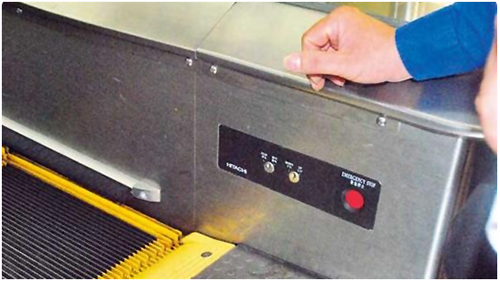
Where is the escalator emergency brake switch (key switch box) installed?

The position of the escalator emergency stop button is slightly the same, usually in a prominent position on the top of the escalator. And they’re all red. At the top and bottom of the armrest, both on the edge – red button, press to make an emergency stop.


What is the working principle of elevator door lock?

Elevator lock, it is car door, layer door lock device (refer to commonly layer door). Under normal circumstances, the door cannot be opened without a locking device, protecting the person from being cut or falling. It is an important safety device for elevator.


The lock is mainly composed of lock hook, lock block, force element, roller, open lock door wheel, electric safety electric shock and triangle lock.


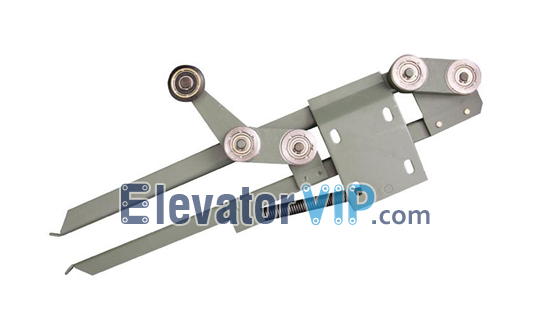
  • Tock hook and lock block constitute lock effect. The lock door shall not be opened, and the meshing depth shall be over 7mm, and the endurance shall be over 1000N.


  • The applied force element is used to automatically reset the door lock after opening the door. It is a reset device (when it fails, gravity shall not open the door lock).


  • The roller and the unlocked door wheel are used to open the lock. When the elevator arrives at the station, the door operator is driven by a series of mechanical drives. Finally, the door cam is used to drive the roller and the unlocked door wheel to open the door lock and pull the door open.


  • The electric safety shock is to verify whether the lock hook and lock gear meshing reach more than 7mm. Once the electric safety shock is broken, the elevator shall not operate.


5) Triangle lock is used to open the layer door under abnormal circumstances, that is, the triangle lock on the layer door. Non-professionals are not allowed to use it.

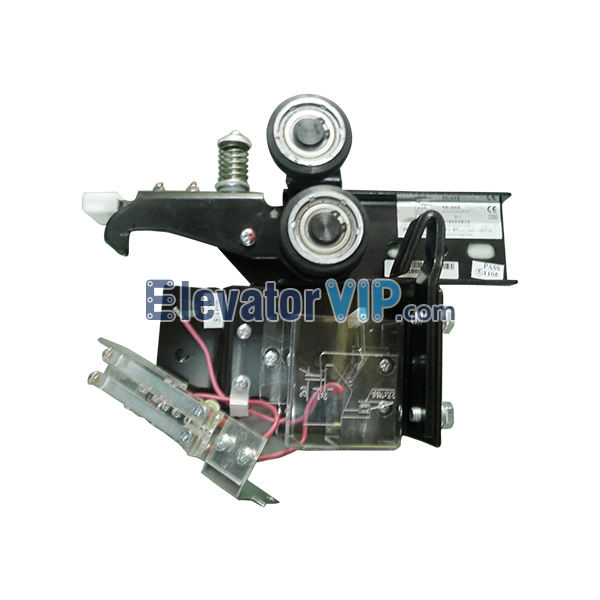
Elevator 161 Mitsubishi Landing Door Lock, Elevator Landing Door Lock for Header Track, Elevator Right Landing Door Lock, OTIS Lift Landing Door Lock, Elevator Landing Door Lock, Elevator Landing Door Lock Supplier, Elevator Landing Door Lock Manufacturer, Elevator Landing Door Lock Factory, Elevator Landing Door Lock Exporter, Wholesale Elevator Landing Door Lock, Cheap Elevator Landing Door Lock from China, XAA431R1-Right

Elevator 161 Mitsubishi Landing Door Lock, Elevator Landing Door Lock for Header Track, Elevator Right Landing Door Lock, OTIS Lift Landing Door Lock, Elevator Landing Door Lock, Elevator Landing Door Lock Supplier, Elevator Landing Door Lock Manufacturer, Elevator Landing Door Lock Factory, Elevator Landing Door Lock Exporter, Wholesale Elevator Landing Door Lock, Cheap Elevator Landing Door Lock from China, XAA431R1-RightContinue reading

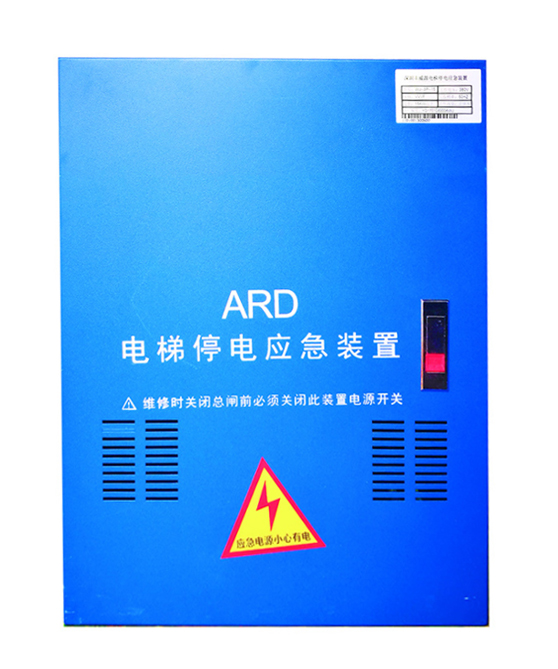
Elevator Automatic Emergency Evacuation Device (ARED)

Accidents are inevitable in the daily use of elevators. As an effective means to ensure the safety of passengers when the elevator fails, Automatic emergency evacuation device should be added. It is a tiring elevator emergency rescue equipment, mainly used in the operation process of the elevator, when the ac power all of a sudden power failure or malfunction occurred in electric control system and make the car parked in shaft, automatic conversion, cut off the original electric control system, ac power supply elevator and capsules traction to flat layer position after open the door, so that passenger can in time out of the woods yet.

Main technical parameters

Input voltage: AC380V plus or minus 10%

Drive power: less than or equal to 32.5KW

Direction of operation: move in a certain direction or choose the direction of light load

Running speed: one tenth of the normal speed of the elevator is adjustable

Shape size: 150x230x600(mm) 210x510x530(mm) 300x428x740(mm)

The working principle:

  1. Emergency operation

When the elevator stops running in case of sudden power failure, the DSP control system of the emergency device will immediately detect the status of the elevator and automatically put it into emergency rescue. First of all, K1A absorbs and closes the power supply of the external power grid to the elevator control transformer for electric interlock. Then the safety, door lock and repair circuit of the elevator are tested and power is supplied to the sensor in the gate area, detect the flat layer signal, if normal, start current converter to power the door control system (ac door, dc door, frequency conversion door),  so the MD of the open-door motor gets the required voltage and opens the car door and hall door at the same time; If the car is not flat layer position the relay closed normally open contacts to the brake circuit by the dc converter power supply, open the brake, three-phase inverter circuit output voltage by K2A normally open contacts to power a traction machine, traction capsules to a certain direction. The car runs to a flat floor and stops. The three-phase inverter stops output and closes the lock. After the door and hall door are opened, the contacts of the above contactor and relay of the emergency device are all restored to the state before the emergency operation

  1. Safety lock

If the DSP control system of the emergency device determines that the stop operation of the elevator belongs to the fault of the safety loop or lock loop, the device will not be put into emergency operation according to the requirements of the safety regulations of the elevator operation. Even after emergency device in emergency operation, always in the monitoring of elevator safety circuit and door lock loop signals but any protection, emergency operation will terminate immediately, in order to ensure the safety of the passengers and the elevator equipment and reliable. Likewise, the emergency device is always monitoring the maintenance loop of the elevator control system. When maintenance personnel repair the elevator, as long as the maintenance switch is pressed, the device will automatically lock, not emergency operation

  1. Emergency end

After the end of emergency operation, the device is disconnected from all parts of the elevator control system and is in an isolated standby state, which has no impact on the normal operation of the elevator. When the three-phase ac power supply is restored, the charging circuit of the emergency device will automatically recharge the battery pack.

Elevator safety part – Door Cam

There is an important part in elevator equipment called elevator door cam, which can improve the safety coefficient of elevator door, effectively guarantee the safety of passenger and passenger, flexible response and effective operation. It is one of the important elevator safety parts.


Elevator door cam function: Elevator door cam is a mechanism responsible for opening and closing the car door of elevator hall. When it receives the signal of elevator opening and closing, the elevator door machine controls the door motor through its own control system, turning the torque generated by the motor into a force in a specific direction, and closing or opening the door. When the closing force of the door is greater than 150N, the door machine will automatically stop closing the door and reverse open the door to play a certain degree of closing protection.

Elevator safety part door cam, what is the elevator door cam, traction rope of elevator, door cam safety device ensures the safety of elevator, elevator door cam size, elevator door cam specificationContinue reading

The classification of elevator door operator

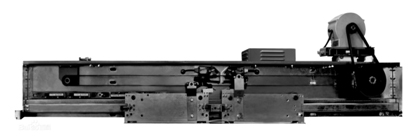
Elevator door operator, which is a responsible for the elevator hall car door opening and closing institution, when the elevator opened, closed signal, the elevator door operator through the built-in control system control to open the door motor, the motor torque into a certain direction of force, close or open the door. When the closing force of the door is greater than 150N, the door operator will automatically stop closing the door and reverse open the door to play a certain degree of closing protection.

The technology of door operator has experienced the development of mechanical door operator, frequency conversion door operator and permanent magnet synchronous door operator.

Frequency conversion operator

Ac asynchronous frequency conversion door operator is usually referred to as frequency conversion door operator for short. There are two kinds of motion control modes of elevator: speed switch control mode and encoder control mode. “Speed switch control method cannot detect the movement direction of the car door, position and speed, can only use position and speed open-loop control, lead to relatively poor control accuracy and the smoothness of movement process of the crane is not so good, so use more” encoder control mode “.

The classification of elevator door operatorContinue reading

What is the principle that escalators only start when people taken?

Due to the lack of energy and power resources, the operation of escalators under no-load condition has become a huge waste. Therefore, we envisage that if the escalator can be automatically detected to be empty for a period of time, the escalator will be instructed to slow down from full speed to half speed. In the relatively infrequent places where people come in and out, based on the above ideas, after the escalator detects the no-load status for a period of time, it will slow down gradually from full speed to stop operation, so as to save about 30% ~ 50% of electricity. When a passenger steps on the bed cover of an escalator, the escalator can start running at full speed by automatically sensing the arrival of the passenger through a photoelectric sensor set at the entrance of the escalator cover.

What is the principle that escalators only start when people taken?

What is the principle that escalators only start when people taken?

Working principle:


  1. The core parts of the escalator are two chains, which rotate around two pairs of gears. At the top of the escalator, an electric motor drives the transmission gear to rotate the chain ring. A typical escalator USES a 100 horsepower engine to turn the gears. The engine and chain systems are mounted in trusses, which are metal structures that extend from floor to floor.
  2. Unlike the conveyor belt moving a plane, the chain ring moves a set of steps. The most interesting thing about escalators is the way they move. The steps remain level as the chain moves. At the top and bottom of the escalator, the steps fold into a platform. This makes it easier to get up and down the escalator.
  3. Each step of the escalator has two sets of wheels, which rotate along two separate tracks. The top gear (wheels near the top of the steps) is connected to a rotating chain and is pulled by a drive gear located at the top of the escalator. The other wheels simply slide along the track behind the first wheels.
  4. The two tracks are separated from each other, so that each step can be kept level. At the top and bottom of the escalator, the track is in a horizontal position, flattening the steps. There are a series of grooves inside each step to connect the front and rear steps during the leveling process.
  5. Besides rotating the main link, the motor in the escalator can also move the handrails. The armrest is just a rubber conveyor belt that circulates around a series of wheels. The conveyor belt is precisely configured to move at exactly the same speed as the steps, making the rider feel smooth.
  6. The escalator system is not capable of lifting people up dozens of floors as elevators do, but it is suitable for providing short distance transportation. This is because of the high load rate of escalators. When the elevator is full, no one else can get on until it reaches the designated floor and returns. On escalators, as long as one person reaches the top, it makes room for others.